

The AI-Era Product Skill Stack
From Execution at Scale to Judgment at Scale

If PM teams are shrinking and execution is becoming cheap, the real leadership question isn’t how do we ship faster?
It is what replaces scale?
The uncomfortable answer is not more technology.
It’s better judgment.
Most digital transformations stall not because organizations lack capability, but because leaders continue to reward old behaviors inside new systems. AI doesn’t fix that problem; rather, it exposes it.
And, you only reap what you sow.
So – what are you rewarding?
Are You Rewarding the right behaviors?
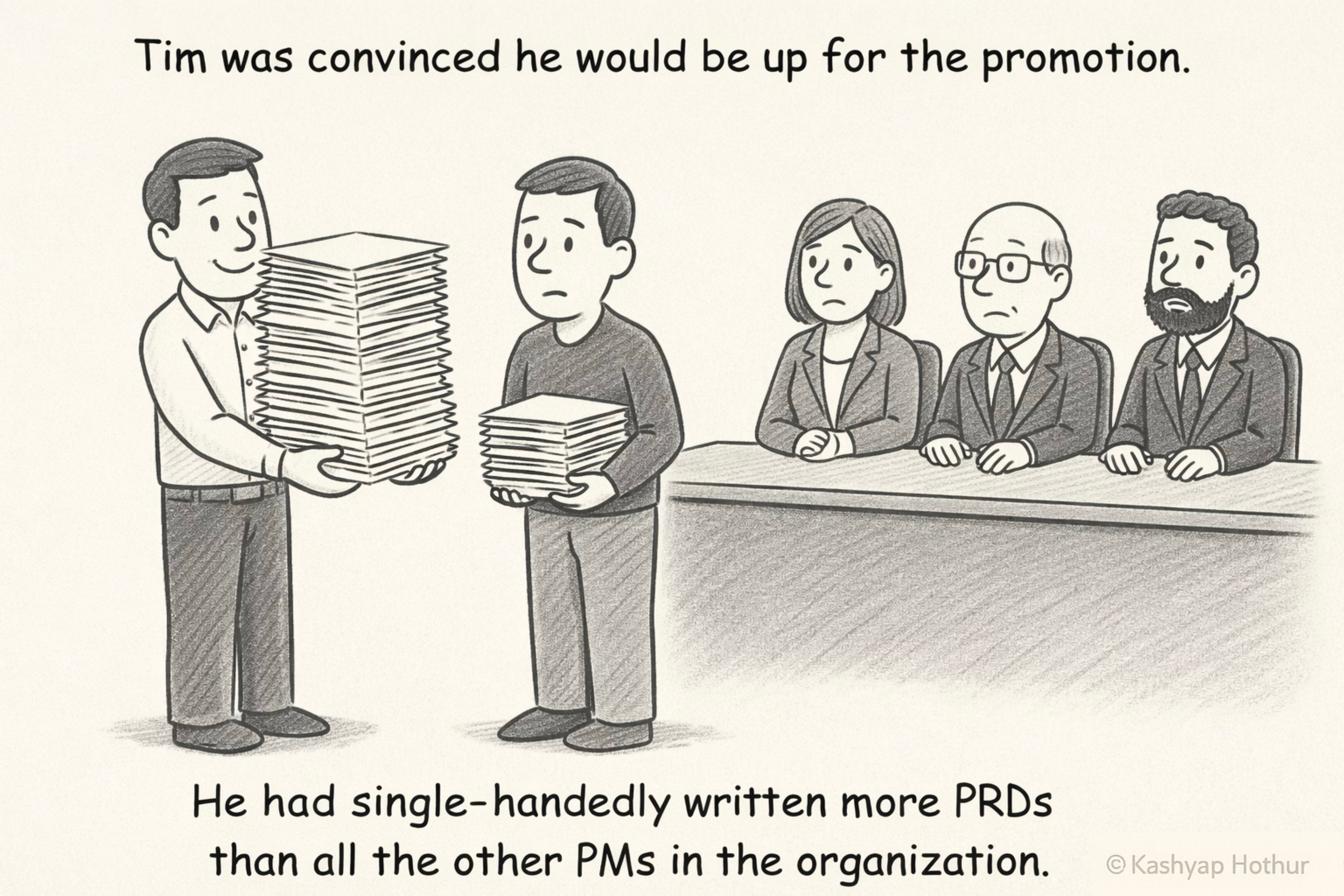
You may be modernizing your toolchain – copilots, automation, data platforms, faster delivery loops – but are your star performers still the ones who:
Have packed roadmaps
Consistently push feature throughput
Hit every deadline with on-time delivery
If so, AI will absolutely help accelerates the model – PRDs will get written faster. Backlogs will fill up quicker. Dashboards will look better. Output will goes up.
But outcomes stay flat.
AI doesn’t transform the organization.
AI supercharges whatever behavior the leadership system rewards.
So, What Should You Reward?
If AI makes execution cheap, leadership leverage shifts to decision quality.
The PMs worth rewarding in the AI era are not ones who ship most… they are the ones who decide best.
Reward PMs who:
Kill work early – before it becomes a roadmap commitment
Reframe problems when the initial ask is wrong or incomplete
Reduce scope while increasing impact
Create clarity that allows teams to move independently
Surface second-order effects before they show up in metrics
These behaviors don’t inflate dashboards.
They compound over time.
What Great Looks Like in Practice
The key question in reviews shifts from:
“What did you ship?”
to
“What did you choose not to ship—and why?”
In organizations that get this right:
Roadmaps shrink after AI adoption, not expand
Teams ship fewer initiatives but abandon bad ones earlier
Strategy reviews focus on choices made, not slides produced
PMs are celebrated for clarity, not throughput
Leaders trust teams because decision logic is sound, not because plans are detailed
The system feels calmer, not busier.
AI doesn’t create this outcome.
Leadership does – by changing what “good” looks like.
What Skills Do PMs Need to Succeed in This New ERA?
AI increase decision volume.
This skill stack ensures decision quality scales with it.
1. Problem Framing
Defining the right problem before solutions are generated at scale.
2. Decision Quality
Making explicit tradeoffs that hold up under hindsight.
3. Strategic “Taste”
Knowing which good ideas to ignore as optionality explodes.
4. Working With AI as a Thinking Partner
Using AI to stress-test assumptions, not outsource judgment.
5. Sense-Making Across Signals
Synthesizing noisy signals into clear direction.
6. Saying No Early, and Well
Killing low-value work before it becomes organizational drag.
7. Outcome Ownership
And my favorite oen of the lot – owning long-term consequences, not just shipped output.
The unifying skill here is “judgment density”:
the ability to make fewer, better decisions, faster.
How Can Leaders Support this Transformation?
These skills cannot develop in vaccum.
The following leadership behaviors are now existential – not optional.
1. Incentive Design (What You Reward)
Leaders must explicitly reward judgment, focus, and clarity—not throughput and motion.
Why this matters: AI amplifies whatever the system rewards; misaligned incentives cause organizations to do the wrong things faster.
2. Problem Selection (What Gets Attention)
Leaders decide which problems are worth solving before teams ever frame solutions.
Why this matters: When solutions are cheap, poorly chosen problems become the fastest way to waste time, talent, and AI leverage.
3. Decision Hygiene (How Choices Get Made)
Leaders enforce clarity around tradeoffs, constraints, and rationale at decision time.
Why this matters: AI increases decision velocity; without hygiene, bad decisions propagate faster and become harder to unwind.
AI doesn’t reduce the leadership burden.
It concentrates it.
Coming Up Next
If AI changes what great PMs look like—and leadership must change what it rewards—then the next question is unavoidable:
What kind of product organization can actually sustain this?
In the next article, I will explore how we can design product organizations to drive continuous transformation.